AC vs DC Motors: Key Differences Explained
Understand how AC and DC motors differ in power, control, torque, efficiency, cost, and best-fit applications to choose the right drive for your needs.
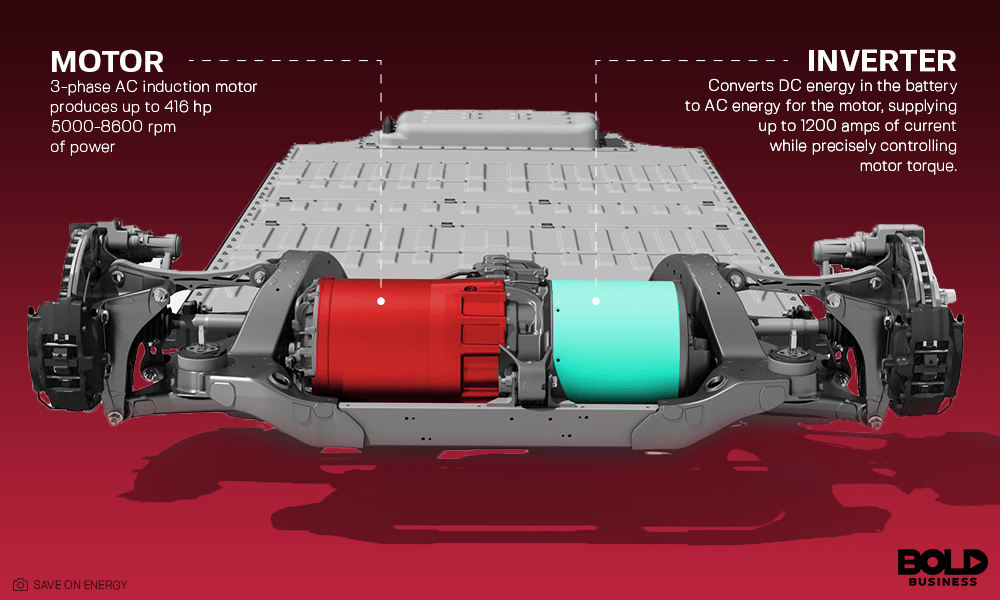
Core Principles: At their heart, AC motors and DC motors convert electrical energy into mechanical motion using electromagnetism, but they differ in how power flows and is controlled. An AC motor is fed by alternating current, where voltage and current reverse direction in a smooth waveform, creating a rotating magnetic field that pulls the rotor along. A DC motor receives direct current that flows one way, and its commutation — handled mechanically with brushes and a commutator or electronically in brushless designs — swaps current in the windings to keep torque continuous. The result is a contrast in behavior and design: AC machines tend to be simpler at the rotor, relying on the stator's alternating fields, while DC machines embed switching into the motor or its controller. Understanding this foundation explains why AC options are prized for rugged, continuous operation and grid alignment, and why DC variants shine in precise speed control, battery-powered systems, and responsive start-stop tasks.
Construction and Components: The anatomy of each motor type reveals how it handles energy conversion. A typical AC induction motor uses a laminated stator with distributed windings and a squirrel-cage rotor made of conductive bars shorted by end rings; rotating fields induce currents in the cage, generating torque with no brushes. Variants like synchronous motors add permanent magnets or field windings to lock speed with supply frequency. In the DC motor family, traditional brushed designs employ an armature, commutator, and carbon brushes that mechanically switch current to maintain torque direction, offering strong low-speed performance at the cost of wear. Brushless DC motors relocate commutation to an electronic controller, pairing a permanent-magnet rotor with a wound stator for quiet, efficient, low-maintenance operation. Around these cores sit enclosures, bearings, and cooling paths, plus optional drives or speed controllers — such as variable frequency drives for AC or compact ESCs for BLDC — that tailor performance to the application.
Performance, Torque, and Control: When users compare AC vs DC motors, they often focus on torque curves, speed regulation, and control finesse. DC motors are celebrated for near-linear torque versus current and straightforward speed control via voltage or pulse-width modulation, enabling smooth low-speed operation and brisk dynamic response. Brushless DC adds precise, sensor-based or sensorless commutation for servo-like behavior without brush maintenance. AC motors, particularly induction types, can deliver excellent efficiency and robustness, with speed most effectively adjusted by altering supply frequency using a VFD. This enables constant-torque or variable-torque profiles for conveyors, compressors, and fans. Starting torque varies by design: wound-rotor and specially tuned induction machines can produce strong pull-up torque, while synchronous machines excel at steady-state efficiency. Advanced vector control narrows the historical gap, giving AC drives fast, accurate current and flux control. Selection ultimately balances ease of control, response time, torque at zero or low speed, and how the motor behaves under changing loads.
Efficiency, Heat, and Maintenance: Energy conversion is never perfect, so managing losses and heat is central to motor performance. AC induction motors experience stator and rotor copper losses, core losses from hysteresis and eddy currents, and stray load losses; design choices in lamination steel, slot geometry, and cooling help minimize these. DC brushed motors add brush and commutator friction and arcing losses, which also create wear and require periodic service. Brushless DC and synchronous AC designs, with permanent magnets and electronic commutation, often achieve high efficiency over a broad operating range, especially under partial loads. Thermal management uses conduction paths, fans, or liquid cooling to keep windings within insulation class limits, preserving lifespan. Maintenance needs hinge on bearings, brushes where present, and cleanliness to prevent contamination and imbalance. Noise and EMI considerations influence shielding and filtering, while duty cycle, starts per hour, and ambient conditions guide enclosure choices and cooling margins that keep performance consistent and reliable.
Applications and Selection Factors: Choosing between AC and DC motors depends on the application profile, power source, and lifecycle constraints. For fixed installations with grid power, AC induction motors dominate fans, pumps, blowers, and compressors, where ruggedness, variable frequency drive compatibility, and long service intervals matter. When compactness, battery operation, or agile control are priorities, DC and BLDC motors excel in robotics, drones, small vehicles, precision tools, and actuators. Consider required starting torque, continuous versus intermittent duty, speed range, and position accuracy. Environmental factors — dust, moisture, vibration, and temperature — dictate enclosure ratings, sealing, and materials. Integration with gearboxes, encoders, and brakes shapes total solution performance. Cost spans more than purchase price: controllers, wiring, protection, energy use, and maintenance form the total cost of ownership. Features like regenerative braking, soft start, and safety interlocks influence both efficiency and process quality, making a holistic specification essential for dependable, efficient motion.
Cost, Integration, and Evolving Capabilities: The economics of AC vs DC motors include upfront hardware, control electronics, and long-term energy and service. A basic AC motor can be highly cost-effective, with a VFD added for nuanced control; a BLDC system may carry higher initial cost but repay with efficiency, compact size, and minimal wear. Integration factors — from cabling and EMI mitigation to feedback devices and safety relays — affect commissioning time and reliability. Modern drives and controllers enable sensor fusion, predictive maintenance via vibration and thermal data, and finely tuned torque control that protects gear trains and product quality. Standardized communication lets motors participate in broader automation, while improvements in magnetic materials, power semiconductors, and control algorithms steadily raise performance ceilings. The practical takeaway is balance: match motor physics to the load, choose the control strategy that meets precision and efficiency goals, and evaluate lifecycle costs to ensure durable, scalable motion that adapts as needs evolve.