Common Motor Failures and How to Diagnose Them
Learn the most common motor failures—from bearing wear to winding faults—and how to diagnose them with symptoms, tests, and quick troubleshooting tips.
Electrical Supply and Connections
Reliable motors start with clean power and solid terminations. Many failures trace back to voltage imbalance, phase loss, loose lugs, or undersized conductors that elevate heat and stress insulation. Begin diagnosis at the source: verify line-to-line voltages with a calibrated meter, confirm phase rotation, and compare running current draw on each phase with a clamp meter to spot imbalance or overload. Inspect terminals for discoloration, pitting, or oxidation that signals resistance buildup, and retorque connections to specification after de-energizing. Look upstream at fuses, overcurrent protection, contactors, and soft starters for welded or eroded contacts. A thermographic scan can quickly reveal hot spots at lugs and bus connections. If a motor trips on start, check for voltage sag under inrush or a misapplied starter setting. Do not overlook neutral and ground integrity in mixed systems. Document baseline readings when the system is healthy; deviations over time often expose deteriorating connections before they cascade into winding damage or nuisance trips.
Winding and Insulation Faults
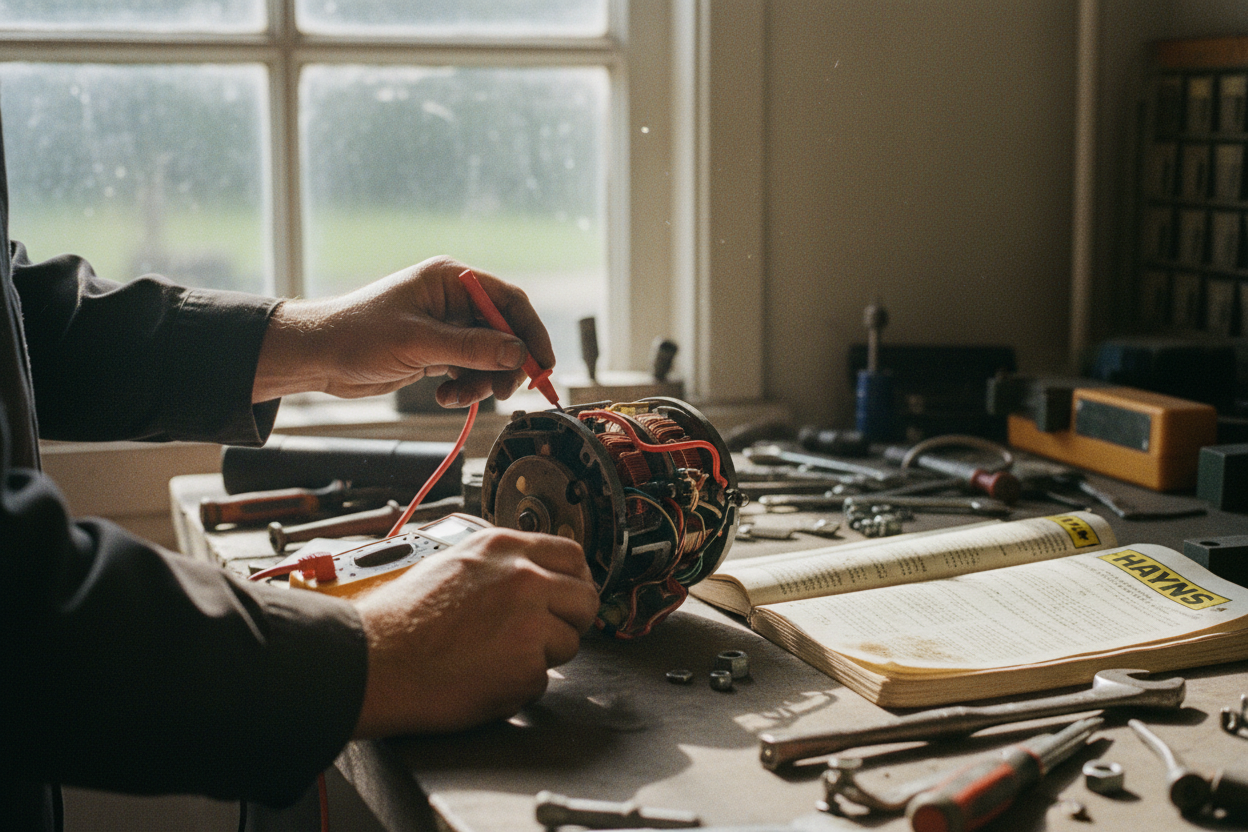
Inside the stator, insulation breakdown and turn-to-turn shorts are common, accelerated by heat, contamination, vibration, or moisture. Symptoms include frequent trips, pronounced humming, localized heating, or a sharp odor from varnish distress. Begin with a de-energized insulation resistance test using a megohmmeter to assess health to ground; compare phases for consistency and trend values over maintenance intervals. A winding resistance check identifies imbalances that hint at partial shorts or poor connections. Where appropriate, surge testing can reveal turn insulation weaknesses, though it should be applied carefully by trained personnel. During energized tests, look for elevated no-load current, low power factor, or asymmetric current waveforms that suggest magnetic anomalies. Motor current signature analysis can flag rotor bar or eccentricity issues that masquerade as winding faults. Remediation ranges from cleaning and drying to full rewind. After repairs, ensure proper enclosure integrity and filtration to keep dust, oil mist, and conductive debris from attacking insulation again.
Bearings, Lubrication, and Shaft Health
A significant share of motor failures originate at the bearings. Telltale signs include rumbling, growling, elevated frame temperature near the end bells, or excessive axial and radial play. Root causes span insufficient lubrication, overgreasing, contamination, misalignment, improper mounting, and shaft currents from electronic drives. Start diagnosis by verifying the correct grease type and interval; incompatible thickeners or too-frequent additions cause churning, heat, and early failure. Inspect seals for breaches that invite dust or moisture, and check for fretting or discoloration on housings that indicates poor fit. Use vibration analysis to identify bearing defect frequencies and distinguish unbalance from inner or outer race damage. A simple listening probe can corroborate spectrum findings. Confirm shaft runout and check coupling hubs for burrs that transmit misalignment loads. For drive-fed motors, consider insulated bearings or a shaft grounding brush to divert common-mode currents. When replacing bearings, follow proper fit tolerances, cleanliness, and preload practices to restore smooth, reliable operation.
Overheating and Cooling Path Issues
Excess heat shortens motor life more than almost any other stressor, accelerating insulation aging and grease breakdown. Overheating often stems from blocked vents, a cracked or missing cooling fan, caked dust in fins, or simply running beyond rated load. Begin by measuring surface temperatures at the frame, bearings, and end windings, and correlate with load and ambient conditions. If temperatures climb while current is normal, suspect restricted airflow; on totally enclosed designs, verify the fan rotates freely and the shroud is intact. On open units, clear lint and debris that blanket wind paths. If current is high, investigate mechanical drag, voltage imbalance, or process changes increasing torque demand. Verify enclosure suitability for the environment; corrosive or humid atmospheres demand extra protection and filtration. Consider thermography to visualize hot spots and identify localized blockages or failing bearings adding heat. After cleaning, recheck temperatures under similar load to confirm improvement, and document the new baseline for ongoing reliability.
Vibration, Alignment, and Mechanical Couplings
Persistent vibration accelerates wear across the motor, coupling, and driven equipment. Common sources include misalignment (angular or parallel), soft foot, unbalance, bent shafts, worn couplings, pulley runout, or resonance near operating speed. Begin with a visual check: cracked bases, loose hold-down bolts, or deteriorated grout compromise stability. Validate foot planarity with feeler gauges, correct soft foot, and tighten mounting hardware in sequence. Use laser alignment or dial indicators to set precise shaft alignment and confirm coupling fit without imposing axial preload. If belts are used, verify sheave condition, groove wear, and proper belt tension to avoid overhung load issues. Perform a bump test or modal check when resonance is suspected, and balance rotors or fans per acceptable tolerances. Vibration trending helps distinguish new faults from chronic conditions; rising broadband levels often precede bearing issues, while discrete peaks track unbalance or misalignment. Correcting the mechanical interface frequently resolves electrical symptoms like elevated current and heat.
Starting, Controls, and Special Cases
Starting circuits and controls can mask or create motor problems. In across-the-line setups, contactor wear, coil weakness, or incorrect overload relay settings cause nuisance trips or contact chatter. Single-phase motors may suffer from failed start capacitors or sticky centrifugal switches, leading to sluggish acceleration and overheating. With VFDs, parameter mismatches, aggressive acceleration ramps, or improper carrier frequency can induce noise, extra heat, or torque deficiencies. Check inrush current, verify ramp times, and compare running current with expected load to detect locked-rotor or stalling conditions. Inspect encoder or temperature sensors (PTC, RTD) for wiring faults that force premature shutdowns. For drive-fed motors, mitigate dv/dt stress with appropriate cable, grounding, and output filters; add line reactors if harmonics disturb upstream protection. Confirm mechanical freedom by spinning the shaft by hand, checking brake release, and decoupling the load when necessary. Systematically validating protection settings, control logic, and mechanical load conditions often reveals the true bottleneck and prevents repeat failures.