Speed and Agility Drills for Any Sport
Improve quickness, coordination, and reaction time with simple, scalable speed and agility drills you can plug into any sport or training plan.
Foundations of Speed and Agility
Speed and agility are built on precise movement quality, not just effort. Before chasing times or distances, anchor training in a thorough dynamic warm-up, joint mobility, and targeted activation for hips, core, and feet. Great movers manage posture, arm action, and ground contact time while keeping the center of mass balanced over a stable base. Think in systems: acceleration, max-velocity mechanics, deceleration, change of direction, and reactive speed all interact. Sharpen proprioception with simple balance tasks, then groove patterns like skips, marches, and low hops to teach rhythm and elasticity. Coaching cues should be short and actionable — tall through the crown, punch the ground, quick hands, quiet feet. Emphasize stiffness at the ankle for crisp contacts and triple extension through hip, knee, and ankle for drive. Keep rests honest so quality stays high. Over time, stack layers: basic patterns to resisted efforts, then to reactive scenarios that mirror the chaos of sport.
Linear Speed Essentials
Linear speed starts with crisp acceleration. Use wall drills, low marches, and A-skips to teach forward lean, neutral spine, and powerful shin angles that point where you want to go. Short sprints from various starts — split stance, falling, half-kneel — hardwire the first three steps, where most plays are won. Cue violent arm action and big pushes, not quick shuffles. For posture, imagine a straight line from ear to ankle while driving the ground backward. Progress with light sled pulls, stadium or hill accelerations for angle awareness, and wicket runs to smooth stride frequency and stride length. Keep reps short so mechanics stay sharp — high quality, full recovery. Sprinkle in dribbles and ankling drills to refine foot strike under the hips and reduce braking. Finish with fly-ins to feel relaxed speed — tall posture, hips high, eyes forward, jaw loose. Remember that linear speed often sets up angles for later cuts, so teach intent and direction with every rep.
Change of Direction Mastery
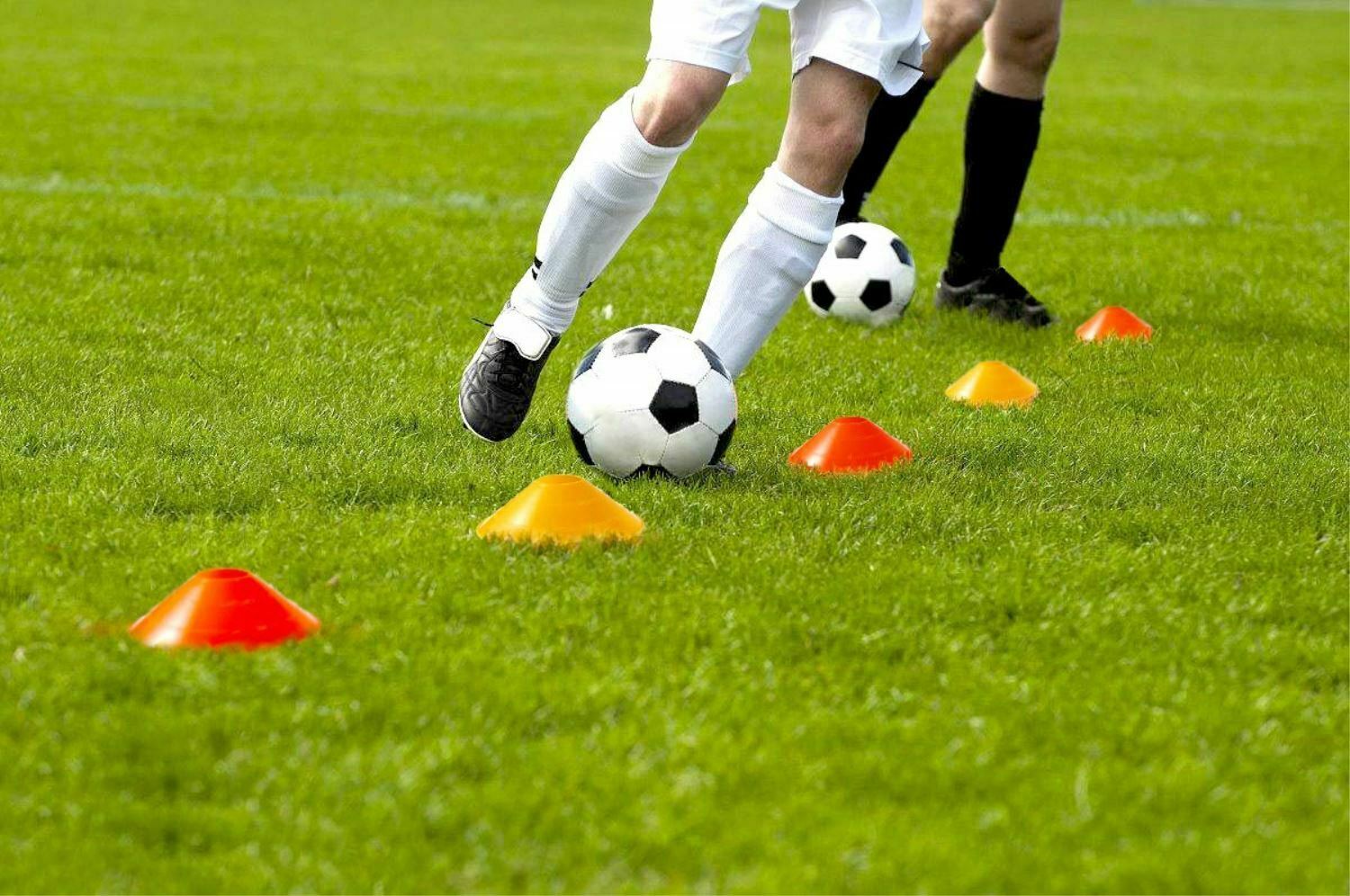
True agility pairs crisp deceleration with decisive re-acceleration. Begin by owning the stop: practice single and double inside-edge plants, soft knees, and hips back to absorb force. Short reps of two to four steps into a drop step teach safe braking mechanics. Then layer classic cone patterns — pro shuttle 5-10-5, T-drill, Y-drill, and zigzags — focusing on shin angle, foot placement, and torso control. Cue low hips into the cut, stacked ribs over pelvis, and eyes scanning the next target. Train both closed-skill (pre-planned) and open-skill (reactive) versions to build transfer. Use lateral shuffles, crossovers, and hip opens to vary entries, and contrast sharp 45-degree cuts with rounder arcs to match sport needs. Keep contacts short by gripping the ground then releasing, avoiding excessive heel strike and valgus collapse. Add gentle perturbations — a tag partner or light push — to teach resilience. Above all, own the first step out of the cut, projecting the center of mass toward the new line.
Footwork, Ladder, and Plyo Rhythm
Footwork and plyometrics refine coordination, elastic rebound, and timing. Speed ladders and mini-hurdles are tools, not tests; move with intent. Cycle patterns like in-in-out, lateral in-outs, and icky shuffle to groove foot speed while keeping posture tall and arms active. Pair ladders with pogo hops, lateral bounds, and low box jumps to build ankle stiffness and elastic reactivity. Progress from bilateral to unilateral work, from stable to variable rhythms, and from straight lines to curves. Keep ground contacts crisp — imagine springy ankles and quiet landings. Avoid overreaching or collapsing through the arch; think tripod foot for pressure distribution. Use metronome-like cadence days to build rhythm, then break rhythm with constraint games to challenge control. Sandwich short ladder bouts between more robust drills so they support, not replace, power work. The goal is efficient contacts that set up faster sprints and cleaner cuts, not just dancing feet. Quality reps, breathable spacing, and clear cues make simple tools highly effective.
Reactive and Cognitive Quickness
Game speed is about reading and reacting. Blend perception-action coupling into sessions with mirror chases, partner tags, color or number calls, and ball-drop races. Replace predictable starts with variable cues — clap, shoulder fake, or visual flash — so athletes react to information rather than a countdown. Use gates or cones to create two to three decision lanes, rewarding the fastest clean exit. Keep distances short to favor decision speed over conditioning. Build in constraints that nudge desired outcomes, like smaller angles for beginners or tighter gates for advanced movers. Practice hip turns, re-accelerations, and recovery steps after a miss to develop composure under chaos. Encourage scanning — eyes up, soft focus — and coach breathing to reduce tension. Finish with small-sided, space-controlled games that elevate situational awareness without collisions. Track progress by counting clean reactions, not just wins. Over time, reactive drills teach athletes to stay tall, decelerate early, and attack late, which translates across sports.
Programming, Recovery, and Transfer
Organize speed and agility on fresh legs for best neuromuscular quality. Two to three focused sessions per week work well, tucked early in practice after a thorough warm-up. Use micro-dosages — a few high-quality sprints, a handful of COD reps, brief reactive bouts — rather than marathons of sloppy volume. Progress by changing one variable at a time: speed, angle, complexity, load, or decision-making. Pair high outputs with full recovery, light mobility, and simple tissue care to protect tendons. Rotate surfaces and footwear to develop robust feet and ankles. Emphasize technique before resistance, then add sleds, bands, or light vests only if mechanics hold. For feedback, time short fly segments, mark exit distances from cuts, or count successful reactive choices. Keep cues minimal during reps, debrief after. Most importantly, link drills to sport roles — sprinters need projection and relaxation, field and court players need braking, hip turns, and first-step burst. Train with clarity, recover with intention, and let quality compound.