Speed and Agility Drills for Any Sport
Boost acceleration, quickness, and change-of-direction with proven speed and agility drills, coaching cues, and weekly plans for any sport and level.
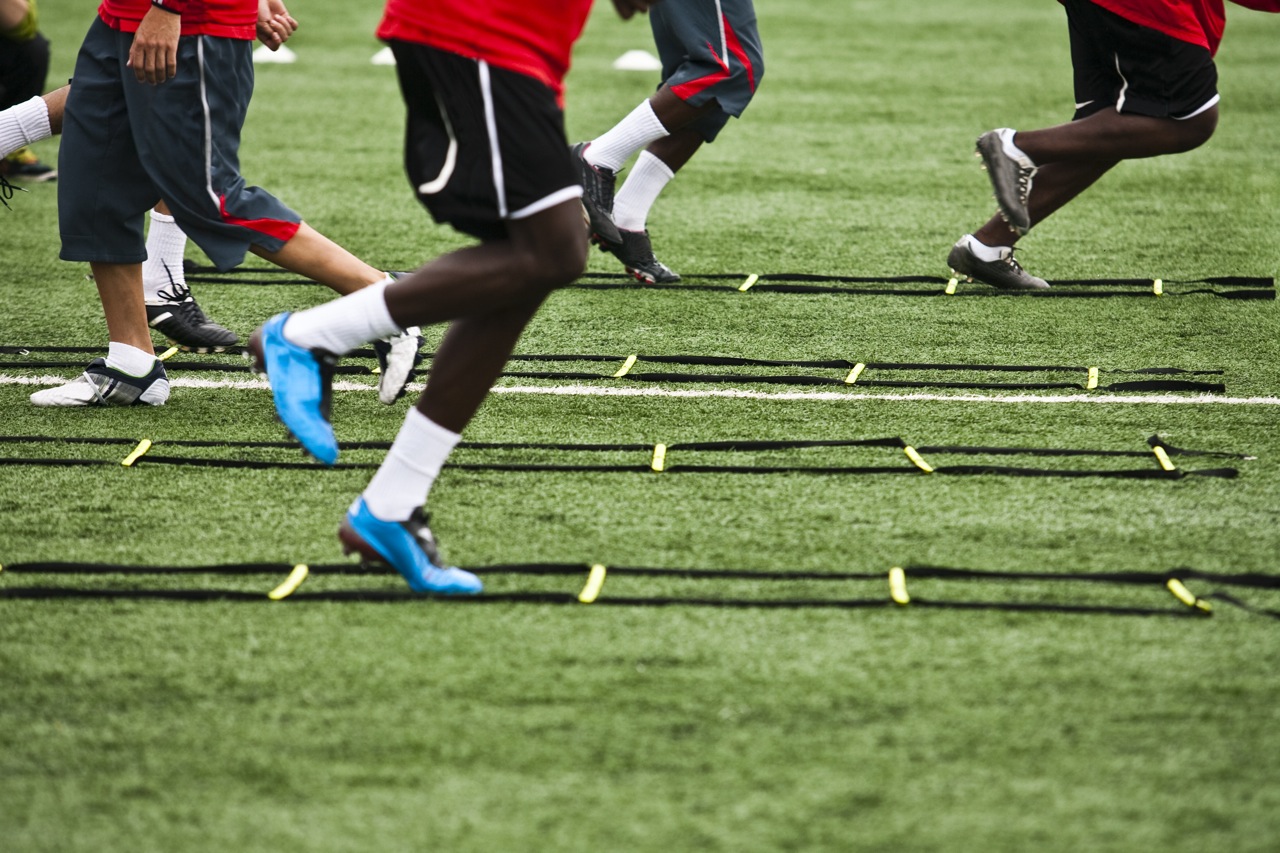
Quick-Foot Foundations
Speed begins with crisp footwork and efficient posture, so start every session with a focused warmup and simple patterns that prime the nervous system. Use line hops, mini hurdles, or a taped ladder to practice quick exchanges that minimize ground contact time. Think tall through the torso, maintain ankle stiffness, and strike the floor with light midfoot contacts to create elastic rebound. Begin with two feet, then progress to single-leg patterns that challenge balance and proprioception. Try in-in out-out, lateral steps, and diagonal entries, keeping the hips level and the arms punching cheek to hip for rhythm. Quality beats quantity; perform short bursts with full recovery so mechanics stay sharp. Imagine the feet drumming quietly while the upper body remains calm, projecting posture and intent. Rotate surfaces to build resilience, from gym floors to firm turf, and practice cues like quiet feet, quick knees, and strong arms. Over time, refined footwork becomes an automatic engine for speed in any sport.
Acceleration and Deceleration Mechanics
True speed shows in the first steps and in how well you stop. For acceleration, use wall marches, falling starts, and push-up starts to rehearse a forward lean from the ankles, aggressive shin angles, and triple extension through the hip, knee, and ankle. Drive the arms vigorously to synchronize stride frequency and length. For deceleration, train eccentric control with snap downs, stick landings, and short sprints that end in a strong, balanced brake. Keep the hips low, chest tall, and take a series of quick steps to absorb force safely, aligning the knee over the toes. Emphasize placing the foot slightly outside the center of mass to manage momentum without collapsing inward. Mix linear accelerations with controlled stops at cones, alternating dominant and non-dominant sides. The blend of go and whoa develops robust braking force, better re-acceleration, and confidence in traffic. Mastering both ends of the speed spectrum protects the body and turns every change in pace into an advantage.
Lateral Change of Direction
Athletes win space by slicing left and right with economy. Build lateral quickness with shuffles, crossover steps, and hip turns that respect shin angles and body alignment. Set simple cone shapes like T, L, or zigzag and practice planting the outside foot under a low center of mass, then projecting off the big toe line. Keep the torso quiet while the hips swivel, and let the eyes lead the feet. Alternate between pure shuffles to maintain square shoulders and explosive crossovers to gain ground without extra steps. Add diagonal entries to teach transitional speed, blending lateral and forward motion. Insert controlled deceleration at each cone, then re-accelerate with a sharp first step. Reinforce symmetry by starting each rep in opposite directions and on different feet. As mechanics sharpen, compress the spacing or add a light time demand. Consistent work here engrains agility, reduces wasted motion, and converts defensive reactions or attacking cuts into smooth, repeatable gains.
Reactive Agility and Decision Speed
Game speed is not just fast legs; it is fast minds. Blend reaction time with footwork using mirror drills, call-and-chase cues, and ball or object drops that force instant choices. Vary the stimulus with colors, numbers, claps, or pointing so athletes read, decide, and move under pressure. Keep distances short and the floor safe, demanding clean deceleration before re-accelerating. Rotate starting stances, including split, lateral, and staggered positions, to prepare for any on-field posture. Encourage wide vision and head stability so the eyes scan while the body stays efficient. Progress to small-sided chases where one partner initiates and the other shadows, teaching perception action coupling and anticipation. Use constraints like reduced space, odd angles, or different ball sizes to stimulate creativity without sacrificing form. The goal is seamless transitions from seeing to doing, turning uncertain moments into assertive, precise moves that hold up under the stress of real competition.
Smart Programming and Recovery
Speed thrives on freshness and intent. Organize drills as short, high-quality bouts with generous recovery, prioritizing crisp mechanics over fatigue. Start sessions with activation and mobility, then stack linear, lateral, and reactive blocks in that order. Progress by increasing complexity before adding volume, and only then raising intensity. Track small markers such as smoother rhythm, quieter landings, and consistent first steps; simple timing or cone counts can guide adjustments. Pair speed work with strength that supports eccentric braking, hip extension, and trunk stability, while keeping heavy fatigue away from key sprint days. Rotate surfaces and footwear, and maintain steady hydration and sleep routines to hasten recovery. Cool down with easy locomotion and breathing to reset the system. Common pitfalls include chasing exhaustion, skipping deceleration practice, and ignoring asymmetries. Keep sessions brief, focused, and repeatable. When athletes leave feeling fast rather than spent, adaptation compounds and speed becomes a durable competitive skill.