Variable Frequency Drives: Smarter Speed Control for Motors
Variable frequency drives optimize motor speed for smoother starts, tighter process control, and up to 50% energy savings in HVAC, pumps, and conveyors.
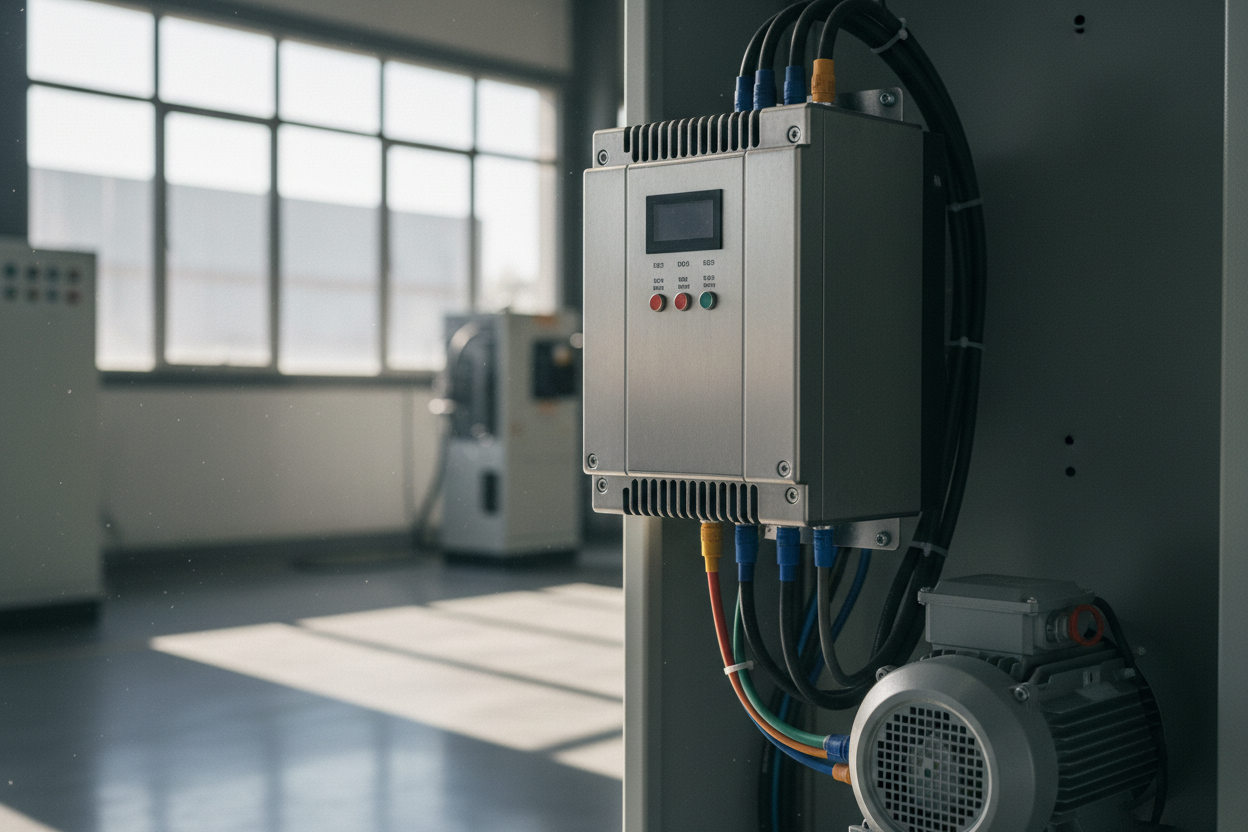
What VFDs Are
Variable Frequency Drives (VFDs) are intelligent electronic controllers that regulate the speed and torque of motors by adjusting the frequency and voltage supplied to them. Instead of running a motor at full speed and using dampers, throttles, or mechanical gear changes to control output, a VFD tailors motor performance to the exact demand of the process. This approach improves energy efficiency, reduces mechanical wear, and enhances process stability. In the motors category, VFDs support a wide range of applications, from pumps and fans to conveyors, mixers, and compressors. By enabling soft start and soft stop, they minimize inrush current, limit belt slippage, and reduce shock to couplings and shafts. They also provide diagnostics, alarms, and data that help technicians understand system behavior. Ultimately, VFDs allow systems to operate smarter, not harder, delivering better reliability and productivity by matching motor output to real-time load requirements while protecting equipment across its service life.
How They Work
A VFD converts incoming AC power to DC using a rectifier, stabilizes it on a DC bus, and recreates AC at the desired frequency with an inverter stage using pulse-width modulation (PWM). By controlling frequency and voltage together, the drive maintains an appropriate V/Hz ratio, preserving magnetic flux and delivering consistent torque. More advanced modes, like sensorless vector control or encoder-based field-oriented control, refine torque delivery at low speeds and during rapid transients. Built-in features such as acceleration/deceleration ramps, torque limits, and slip compensation ensure smooth behavior under changing loads. For braking, options include regenerative capability or dynamic braking with a resistor to manage excess energy. The result is precise speed regulation, improved starting performance, and flexible operation across a broad speed range. By shaping the waveform electronically, VFDs unlock the full potential of motors, allowing stable operation under conditions that would otherwise be inefficient, overly stressful, or simply impractical.
Efficiency & Control
The strongest business case for VFDs often comes from energy savings and process precision. For variable-torque loads like pumps and fans, reducing speed even modestly can significantly cut power consumption, a relationship described by the affinity laws. Instead of wasting energy with throttling or bypassing, the drive matches output to real demand, lowering operating costs while maintaining comfort, flow, or pressure targets. Integrated PID control helps hold setpoints despite disturbances, trimming overshoot and hunting. Fine-grained speed steps, scheduling, and sleep functions reduce runtime when not needed. Beyond energy, improved control means better product quality, quieter operation, and less mechanical fatigue. Real-time data such as current, speed, and kWh usage inform optimization efforts and predictive maintenance. Over the long term, these capabilities reduce downtime, extend asset life, and improve system responsiveness. By balancing efficiency with control, VFDs turn motors into adaptable assets that serve both operational and sustainability goals.
Common Applications
Across the motors landscape, VFDs thrive wherever load demands vary. In pumping systems, they maintain pressure or flow without the penalties of throttling valves, enhancing reliability and lowering water hammer by implementing controlled start and stop profiles. In HVAC and process fans, they stabilize airflow, reduce noise, and minimize wear on drive components. Conveyors benefit from smooth acceleration to prevent product spills and from speed trimming to balance upstream and downstream processes. Mixers and agitators use speed control to achieve consistent shear or blending without overworking the motor. Compressors leverage drives to match capacity with demand, cutting idle losses and cycling. Even in applications demanding constant torque or precise positioning, features like vector control, braking, and safe torque off (STO) expand what is possible. Multi-motor coordination, ramp shaping, and fault handling further elevate system performance, demonstrating how VFDs adapt to diverse equipment while protecting both the mechanical drivetrain and the electrical supply.
Selection Factors
Choosing the right VFD starts with the motor nameplate: voltage, current, power, speed, and efficiency guide base sizing, while service factor and duty cycle inform overload requirements. Understand the load profile—variable torque, constant torque, or constant power—to pick appropriate control modes and overload class. Environmental conditions matter: ambient temperature, altitude, dust, moisture, and corrosives determine enclosure type and cooling, from compact frames to sealed options with suitable IP or similar ratings. Long motor cables may require dV/dt or sine-wave filters to protect windings and reduce bearing stress. On the line side, reactors, DC chokes, or harmonic filters mitigate current distortion and improve power quality. Consider braking resistors or regenerative capabilities for decelerating loads. Evaluate I/O, communication protocols, and safety features like STO. Finally, allow margin for future capacity, ensuring the drive can accommodate process changes, upgrades, or additional control features without overstressing components.
Install & Safety
Proper installation ensures reliable, compliant operation. Use correctly sized shielded motor cables and robust grounding practices to contain EMI and protect personnel and equipment. Observe maximum cable lengths and apply dV/dt or sine-wave filters when needed to limit voltage stress and bearing currents. Provide adequate ventilation and clearance to manage heat, and consider enclosures or mounting that address dust, moisture, and shock. On the line side, specify appropriate overcurrent protection, disconnects, and line reactors or harmonic filters to safeguard power quality. Match RCD/GFCI types to VFD output characteristics to avoid nuisance trips. For stopping and emergency scenarios, integrate safe torque off (STO) and ensure lockout/tagout procedures are clearly defined. Parameterization should include accel/decel ramps, current limits, and fault responses tailored to the equipment. Document settings, label wiring, and validate rotation and interlocks during commissioning. A disciplined approach reduces trips, mitigates harmonics, and builds a foundation for long-term safety and uptime.
Operation & Upkeep
Once running, VFDs reward attention to monitoring, tuning, and preventive maintenance. Track parameters like current, temperature, switching status, and kWh to spot anomalies before they become downtime events. Adjust PID gains, ramp times, and torque limits to align with real process dynamics and seasonal conditions. Keep enclosures clean, confirm fan operation, and inspect connections to prevent heat-related failures or intermittent faults. Periodically check harmonic performance, filter health, and grounding integrity, especially after equipment changes. Review alarms and trend logs to refine setpoints and reduce nuisance trips. For mechanical systems, verify coupling alignment, belt tension, and bearing condition; a well-tuned VFD will protect these components but cannot compensate for neglected hardware. Evaluate firmware and parameter backups as part of change management. Over the lifecycle, these practices sustain efficiency, extend motor and drive longevity, and maintain compliance, ensuring your controlled-speed motors deliver consistent performance with fewer surprises.